

Even if you don’t particularly enjoy drinking wine, you probably think you know all about the sulfites in wine. We’ve heard a lot on this topic over the years, so we get a kick out of some of the ‘untruths’ that people believe.
From the origin of sulfites to the effect they have on people, the myths abound. We decided it was time to put the record straight.
COMMON MYTHS ABOUT SULFITES & WINE
Here are the most common myths about sulfites in wine, along with the actual truths that come straight from science.

MYTH #1: SULFITES ARE UNNATURAL ADDITIVES
‘Sulfites ‘ is a generic term used to describe any type of sulfur dioxide (SO2). Sulfur dioxide is a naturally occurring compound that can be found naturally in some foods and beverages that are fermented.
A prime example, of course, is wine. When the yeast metabolizes during fermentation, sulfites are a natural by-product. Even if they are not added during the winemaking process, there will still be sulfites in the wine.


MYTH #2: SULFITES IN WINE ARE HARMFUL
It’s understandable why so many people think the sulfites in wine are harmful. There’s a warning on the label, after all! But most people’s opinions about S02 derive solely from those two scary words, “contains sulfites”, and nothing more.
The truth is, however, that no known scientific evidence has yet been scraped together to prove any harmful effects of sulfites in wine.
In fact, this particular myth seems to be more dangerous than sulfites themselves! One study found that, because of the fear instilled by the warnings on wine labels, consumers were willing to pay more for the wine that was produced without sulfites. Over time, that can be mighty unhealthy for the wallet.

MYTH #3: SULFITE HEADACHES FROM DRINKING WINE ARE COMMON
Lots of people claim they get headaches from drinking wine… especially red wine and they claim it’s the sulfites. So-called ‘sulfite sensitivity’ does exist, but it’s quite rare. The Food and Drug Administration estimates that around one percent of the population is sulfite-sensitive.
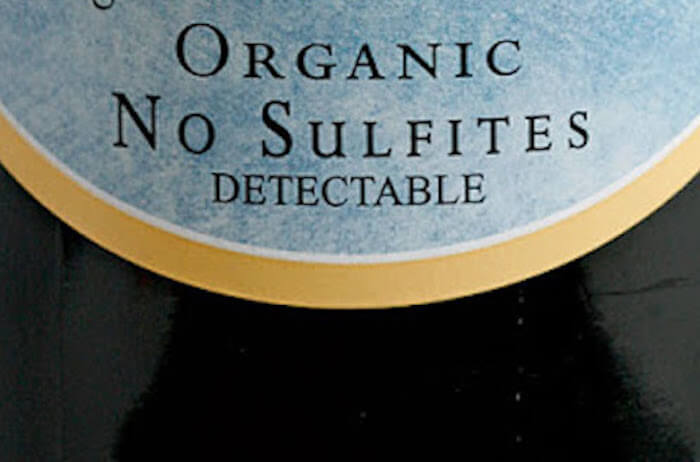
MYTH #4: CONSUMERS CAN CHOOSE SULFITE-FREE WINE
If you’ve purchased ‘sulfite-free’ wine, you are a victim of false advertising. There is no such thing as a wine that’s 100% sulfite-free. According to a researcher at Cornell University’s Viticulture and Enology program, all yeast produces at least a tiny amount of S02.
Sulfites are actually necessary for the wine-making process. Wine is perishable, so some sort of preservative is required. Without SO2, wines have about six months before they become undrinkable. Even then, they’re only good if they’re kept under strictly regulated storage conditions.
The best you can hope for is an organic wine where there is no added SO2. In the United States, organic wines may only be called ‘organic’ if there was little or no SO2 added.

CONCLUSION
If you still think the sulfites in your wine are causing your headaches, it might be time to look for other causes. It could be dehydration associated with the drying effects of consuming alcohol. But you also may indeed have a sulfite sensitivity—one in one hundred people reading this will suffer such a condition.
But for the rest of us, perhaps a low-sulfite wine might be the answer. Just be prepared to pay a little more and to have fewer options when it comes to selecting your next bottle of wine.
YOU MAY ALSO LIKE:

REIKI – HEAL YOURSELF, HEAL THE WORLD
REIKI is a Japanese technique that promotes relaxation and stress relief. While its origins go back to sutras dated 2500 years…

FULVIC ACID FACTS…OR FICTION
Fulvic acid. The term may sound familiar as if the description is hiding in the back of your mind somewhere but…

DIY FRANKINCENSE ROSE CREAM
Make this easy DIY frankincense rose face cream with all organic, natural ingredients. Your new, well-nourished skin will thank you! INGREDIENTS:…
RAW VEGGIE JUICE PULP CRACKERS
Have you ever wondered what to do with the leftover pulp from your juice? Did you hate wasting it? We’ve got…

WHAT YOU NEED TO KNOW ABOUT YOUR SACRAL CHAKRA
The sacral chakra is the second-lowest of seven major energy centers in the human body. Located below your navel, it controls…

SWEAT DOESN’T DEFINE A GREAT WORKOUT
By Kevin Jones Sweating is almost inevitable when working out. You might be one of those who soak their clothes with…