
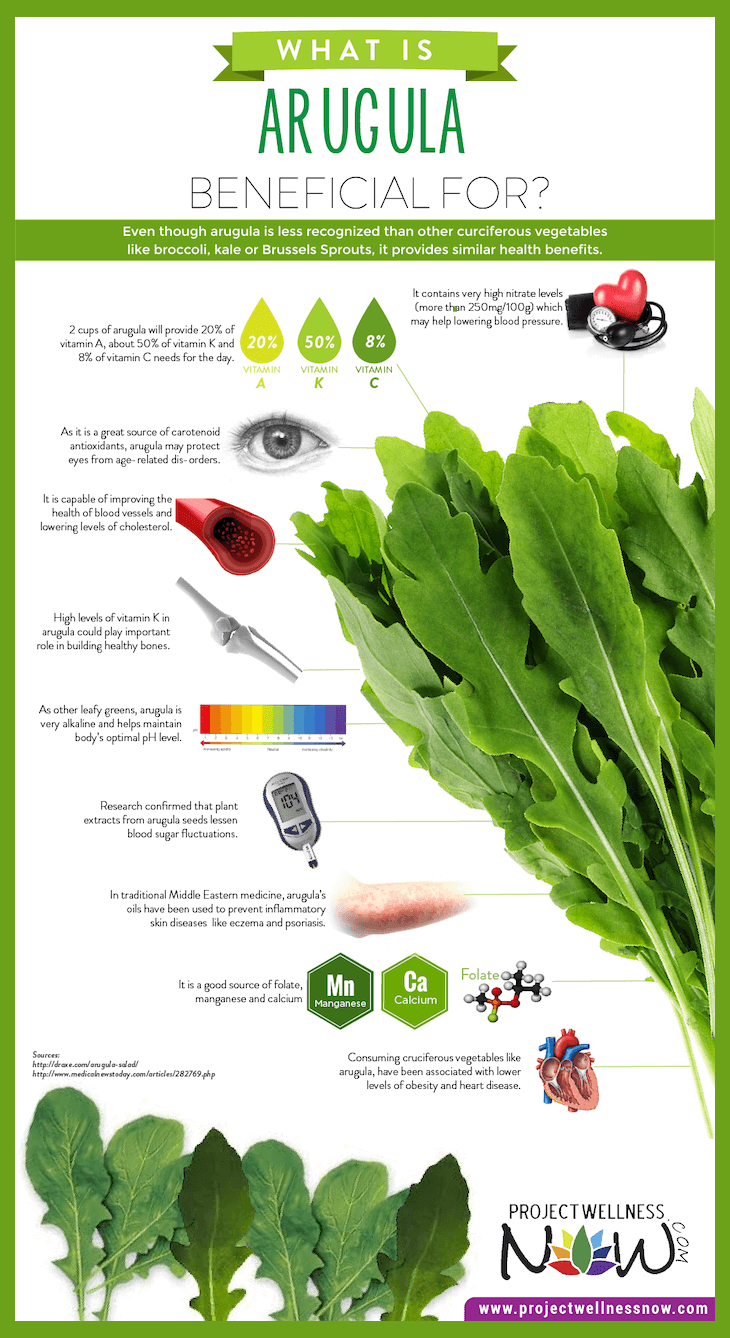
Even though arugula is less recognized than other cruciferous vegetables like broccoli, kale or Brussels sprouts, it provides similar health benefits.
→ It contains very high nitrate levels (more than 250mg per 100g) which may help lowering blood pressure

→ 2 cups of arugula will provide 20% of vitamin A, about 50% of vitamin K, and 8% of vitamin C
→ As it is a great source of carotenoid antioxidants, arugula may protect eyes from age-related disorders
→ It is capable of improving the health of blood vessels and lowering levels of cholesterol
→ High levels of vitamin K in arugula could play an important role in building healthy bones
→ It is very alkaline and can help maintain the body’s optimal pH level
→ The research confirmed that plant extracts from arugula seeds lessen blood sugar fluctuation
→ In traditional Eastern medicine, its oil has been used to prevent inflammatory skin diseases like eczema and psoriasis
→ It is a good source of folate, manganese, and calcium
→ Consuming cruciferous vegetables has been associated with lower levels of obesity and heart disease
YOU MAY ALSO LIKE:

DIY FRANKINCENSE ROSE CREAM
Make this easy DIY frankincense rose face cream with all organic, natural ingredients. Your new, well-nourished skin will thank you! INGREDIENTS:…

COCONUT OIL PULLING: AN ANCIENT PRACTICE WITH AMAZING BENEFITS
When it comes to the health of your teeth and gums, chances are excellent that you’ve been taught about the importance…

MOVE OVER APPLES: LIMES MAY KEEP THE DOCTOR AWAY
Eating fruit is a great way to fuel the body with important nutrients that help strengthen immunity and fight disease. While…

13.1 MANTRAS TO GET YOU THROUGH YOUR NEXT MARATHON
By Braden Tobler There has been a study on mantras and it turns out there could be a lot more to…

MINDSET…
By Yvonne Chamberlain A way of thinking, a belief structure, mental programming, perspective, an attitude, an imagination, fixed belief, an ideology,…
WHY SOME CALL TURMERIC A MIRACLE SPICE
Turmeric is a spice that is most widely recognized for its vibrant orange hue. Traditionally used in Asian cuisine such as…