
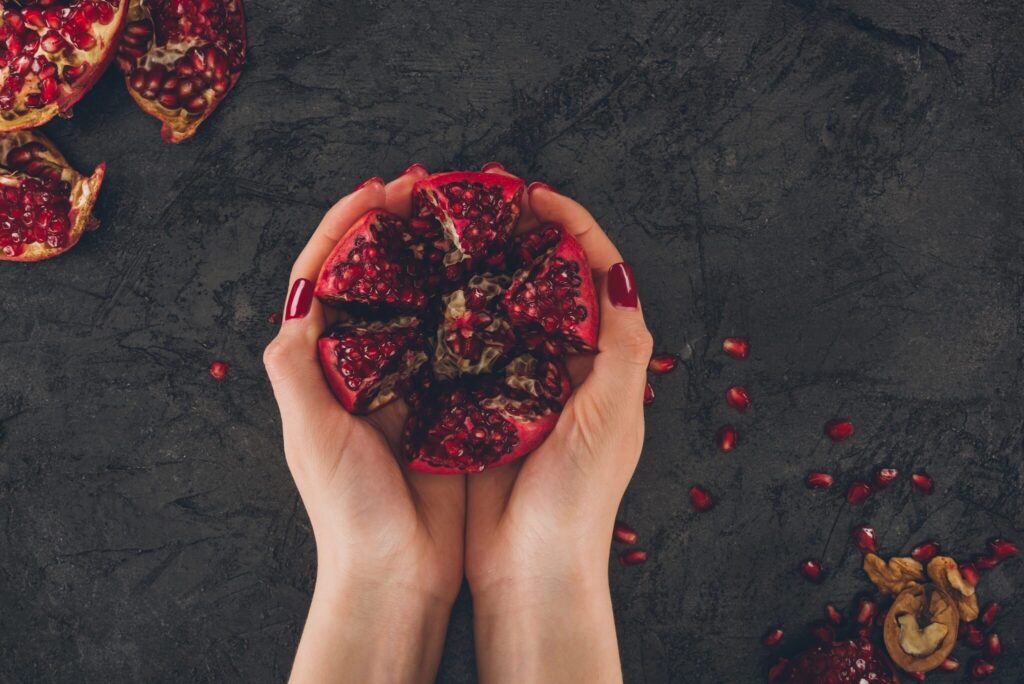
Few fruits have captured the attention of both ancient healers and modern scientists quite like the vibrant, ruby-red pomegranate. Known botanically as Punica granatum, this remarkable fruit has been valued for thousands of years across cultures for its refreshing taste and impressive health-promoting properties. Today, research continues to uncover just how powerful this fruit can be.
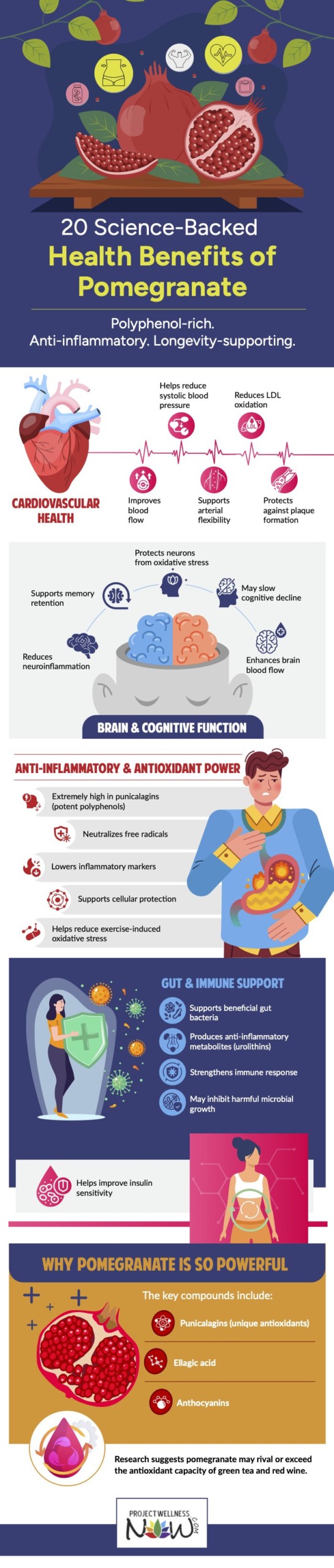
Pomegranates are packed with naturally occurring plant compounds that support overall wellness. Among the most notable are polyphenols such as punicalagins and anthocyanins—potent antioxidants that help protect the body from oxidative stress.
Beyond their antioxidant power, pomegranates have been studied for their potential role in heart health, inflammation balance, cognitive function, and digestive wellness. Researchers exploring the effects of the fruit within Cardiovascular Medicine have found promising connections between pomegranate consumption and improved blood flow, healthier blood pressure levels, and protection of blood vessels. At the same time, emerging studies suggest that the fruit’s unique compounds may also influence immune resilience and metabolic health.
Perhaps what makes pomegranates especially appealing is how easily they can be incorporated into everyday meals. Their jewel-like seeds add a burst of flavor and color to salads, yogurt, smoothies, and grain bowls, making healthy eating both delicious and visually appealing.
While no single food is a magic cure, pomegranates are a powerful example of how nutrient-dense, plant-based foods can play an important role in a balanced, wellness-focused lifestyle.
YOU MAY ALSO LIKE:

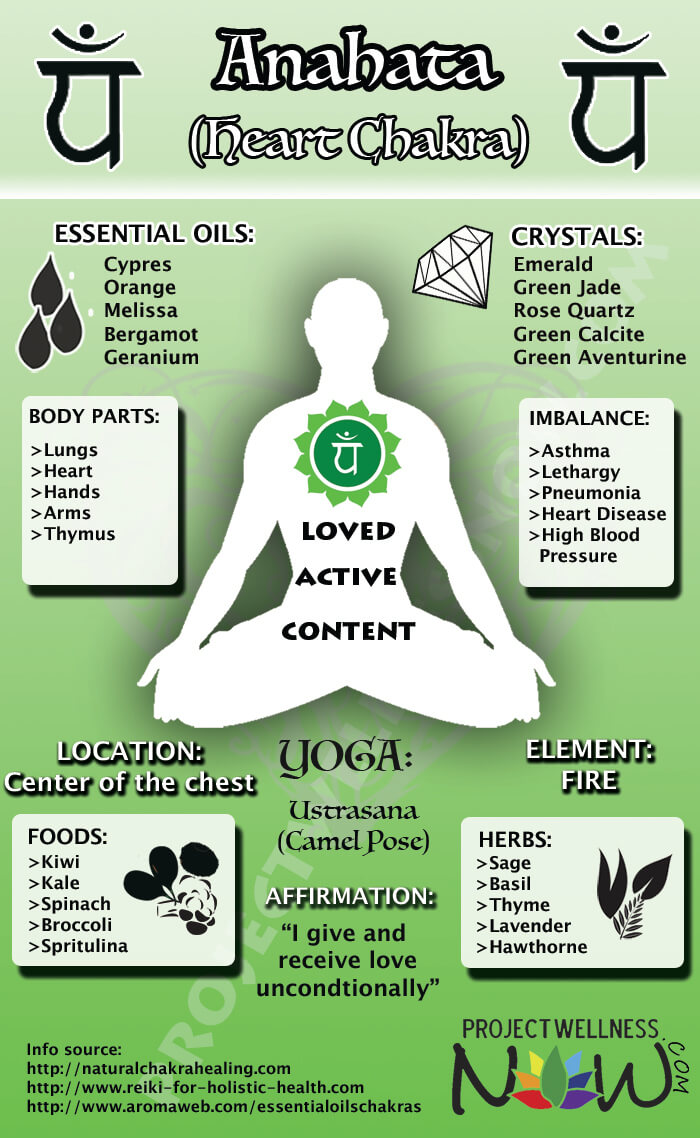
WHAT YOU NEED TO KNOW ABOUT YOUR HEART CHAKRA
Do you often find yourself drained of energy or feeling disconnected from the world? You may be having an issue with…

6 WAYS TO INCREASE HEALTH&WELLNESS THROUGH STRETCHING
Ever since those early PE classes in school, you’ve been told to always stretch before exercising. Now that you’re older, you…
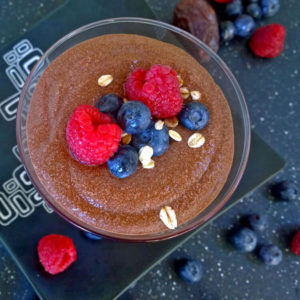
VEGAN BEET CHOCOLATE AND DATES MOUSSE
Chocolate and beets do not mix? Wrong! Try this extraordinary beet mousse by our friend Aarika. She knows beets like nobody…

WHAT YOU NEED TO KNOW ABOUT YOUR THROAT CHAKRA
Do you feel stuck in your vocal expression, have a hard time expressing yourself verbally or experience difficulty speaking up for…
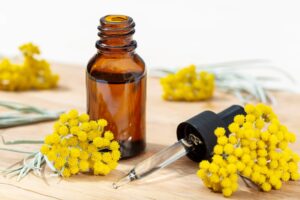
AMAZING BENEFITS OF HELICHRYSUM ESSENTIAL OIL
In the realm of natural health and wellness, essential oils hold a revered place for their vast benefits and therapeutic properties….

5 WAYS TO BE KINDER TO YOURSELF IN 2023
With the new year underway, many of us are looking forward to fresh starts and new resolutions. While most people focus…