

The ancient practice of Ayurveda is about more than medicine and more than lifestyle guidance. It’s about finding a natural balance and living a human life in appropriate harmony with nature. For the Ayurvedic practitioner, everything that exists can be understood as a spectrum of opposites:
– Wet/dry
– Hot/cold
– Airy/earthy
– Steady/changeable
and so forth.
Viewed in this way, the seasons of the year would be classified as warm and wet, warm and dry, and cool and wet. This type of thinking can also apply to times of day, types of food, and types of people, leading to the system of doshas. According to Ayurvedic practice, illness, unhappiness, and disruption occur when these properties are out of balance, existing in either excess or deficit.
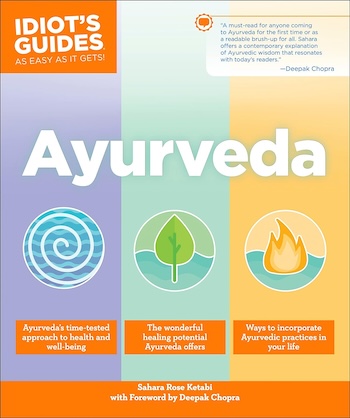
The essential properties of the doshas are:
Vata: the air element
Vatas are airy, cool, and dry. This makes them cerebral, creative, sensitive, and sometimes ungrounded. Physically, they tend to be tall, and thin, have dry skin, and are often cold. They are often inattentive to natural needs for food and sleep and can have irregular habits.
Pitta: the fire element
Pittas are warm and dry. They are strong-willed, passionate, quick learners, who often have a hot temper and impatience. They tend to have an average height and build, and have skin that reddens easily either with sun, exertion, or emotion. They have strong appetites and get grumpy if they miss a meal.

Kapha: the earth element
Kaphas are cool and moist. They are loyal, honest, compassionate, organized, and stubborn. Physically they are strong and athletic, although they tend to gain weight easily, and often have oily skin and hair. They prefer routine in most areas of life and are the most reliable of the doshas.
Each dosha has strengths and weaknesses, and those attributes are affected by diet, season, time of day, their habits, and lifestyle. While most people exist with a combination of these attributes, one set tends to dominate more than others. There are a variety of online quizzes that help a person identify their dominant dosha. FIND YOUR AYURVEDIC BODY TYPE==>
EXPERIENCE ONE OF 2025’S MOST ESSENTIAL ONLINE EVENTS IN NATURAL HEALTH & WELLNESS
When a dosha is exaggerated to the point of weakness, it is said to be aggravated. For example, Kaphas are naturally cool and moist, and, when aggravated, can be stubborn or lazy. Early in the morning, a Kapha time of day, it is easy for this excess of earthy properties to bring out the worst in a Kapha. They might experience weight gain, skin breakouts, and become lethargic and inflexible. During this time, Kapha needs to seek out balance by avoiding cold, oily foods, staying warm, and exposing themselves to new people and experiences. Avoiding foods that further accentuate Kapha attributes, and emphasizing new activities, and disrupting routine a bit, bring Kapha back into balance.

Knowing your dosha, therefore, is only part of the puzzle. Many people think that knowing your dosha is akin to knowing your astrological sign: it’s a label on who you are and how you behave, and nothing more. But Ayurveda is knowing your dosha, and then going on to manage your life to bring balance and harmony in your behaviors, governing your actions in accordance with the natural world all around you.
Therefore Ayurveda, for all its medical benefits and healing properties, doesn’t “feel” like medicine, in the sense that a specific disorder is diagnosed and treated. It “feels” more like recipes: too much of this, not enough of that, a little more here, a little less there, some of this now, and some of that later. It’s a science, but it’s also flexible and intuitive. Living an ayurvedic lifestyle involves attention to one’s nature, and the nature around you, to find and maintain balance.
YOU MAY ALSO LIKE:

THE POWERFUL BENEFITS OF EASTERN MOVEMENT PRACTICES
Engaging in eastern movement practices – such as yoga, qigong, tai-chi, or a martial art – can be hugely beneficial, regardless…
8 FOODS THAT MAKE YOUR LIVER HAPPY
Your liver is one of the largest organs in the body. It plays a central role in all metabolic processes, breaking down and…
THE MUSHROOM OF IMMORTALITY
The full picture surrounding the medicinal power of the Reishi mushroom continues to unfold due to research that has taken place…
ZEN IN A CUP: THE CALMING EFFECTS OF HERBAL TEAS
Our lives are often a busy whirlwind, with many of us searching for ways to create a sense of calm for…
YOU’VE GOT TO LOVE AVOCADOS!
Avocados have taken the health world by storm, and it’s easy to see why. Packed with essential nutrients, heart-healthy fats, and…

SUPERFOOD COFFEE SUBSTITUTES: STAY AWAKE & ALERT WITH THESE HEALTHY DRINKS
If you love the pick-me-up quality of a cup of coffee—but could do without its jittery spike-and-crash effects—then you might want…